
Easter 2027 dates and public holidays in Mallorca, the main processions in Palma and Pollença, Easter food and tips for planning a villa stay over Holy Week.
Easter is a good moment to see a different Mallorca: candlelit processions in the old towns, village pilgrimages up to hilltop hermitages and bakeries full of Easter pies, with mild spring weather and none of the summer crowds. This guide covers the 2027 dates, the ceremonies worth seeing in Palma and in the north of the island, and how to plan a villa stay around them.
Easter 2027 dates in Mallorca
Easter comes early in 2027. Holy Week runs from Palm Sunday, 21 March, to Easter Sunday, 28 March, and in the Balearic Islands the holiday period stretches over five days:
- Thursday 25 March: Holy Thursday (Dijous Sant), a public holiday in the Balearics.
- Friday 26 March: Good Friday, a public holiday across Spain.
- Sunday 28 March: Easter Sunday.
- Monday 29 March: Easter Monday (Segona festa de Pasqua), a public holiday in the Balearics.
Two more dates are worth noting. The clocks go forward one hour in the early hours of Easter Sunday, so check the time of any flight or transfer that day. And Easter 2027 falls within the Easter school holidays in many German states, including Bavaria, North Rhine-Westphalia and Hesse, which means flights and villas for that week are usually among the first to go.
Why Easter is a special time to visit
Semana Santa is one of the most important weeks in the Mallorcan calendar. Almost every town has its own processions, with brotherhoods (confraries) in long robes and pointed hoods, drums, brass bands and candles moving slowly through the old streets. Few summer visitors ever see this side of the island.
The timing also suits a villa holiday. The main processions take place in the evening, so you can spend the day walking, cycling or exploring and head into town once it gets dark. Days are mild, the countryside is green and the island is far quieter than in summer.
Holy Week in Palma
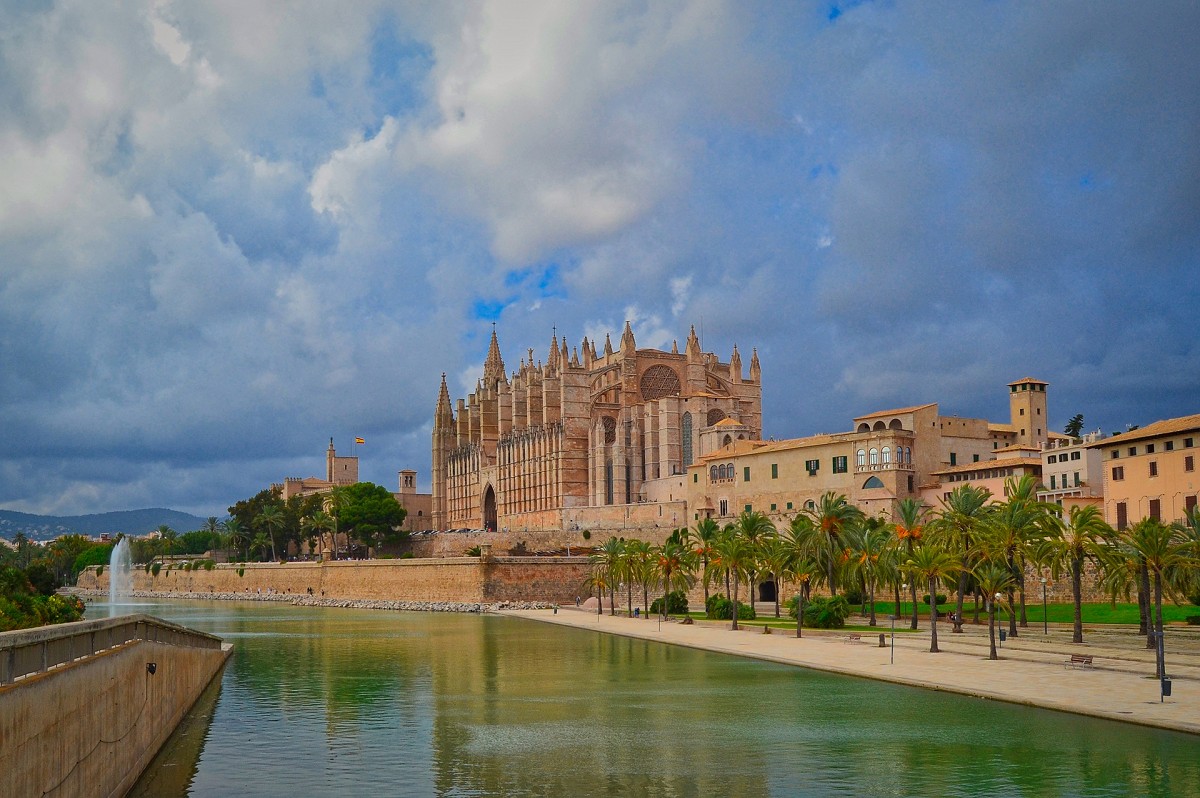
Palma has the largest programme on the island, with processions on most evenings of the week. These are the main ones.
Palm Sunday
The week opens with the blessing of palms and olive branches at the Bishop’s Palace (Palau Episcopal), next to the Cathedral, followed by a procession and Mass in the Cathedral. In the afternoon the brotherhoods walk the procession of Jesus’ entry into Jerusalem through the centre.
Holy Thursday: the Sant Crist de la Sang
This is the main procession of Holy Week in Palma. The Christ of the Blood (Sant Crist de la Sang), the city’s most venerated image, leaves the church of the Anunciació, known as La Sang, on Plaça de l’Hospital and is carried to the Cathedral, with all of Palma’s brotherhoods taking part. The image has led this procession since 1564. In recent years it has set off at 7 pm, and the return of the Christ to its church goes on until the early hours.
Good Friday: the Sant Enterrament
On Good Friday evening the procession of the Holy Burial (Sant Enterrament) leaves the Basilica of Sant Francesc, usually at 7 pm, and ends at the church of Nostra Senyora dels Socors, where the burial ceremony takes place.
Easter Sunday
On Easter Sunday morning the Cathedral holds the Encontre, the meeting between the Virgin and the risen Christ, before the Easter Mass. After several days of solemn processions, it brings the week to a festive close. See our guide to staying near Palma.

Easter in Pollença and the north
If you are staying in the north of the island, you do not need to drive to Palma to see Semana Santa.
The Davallament on the Calvari steps
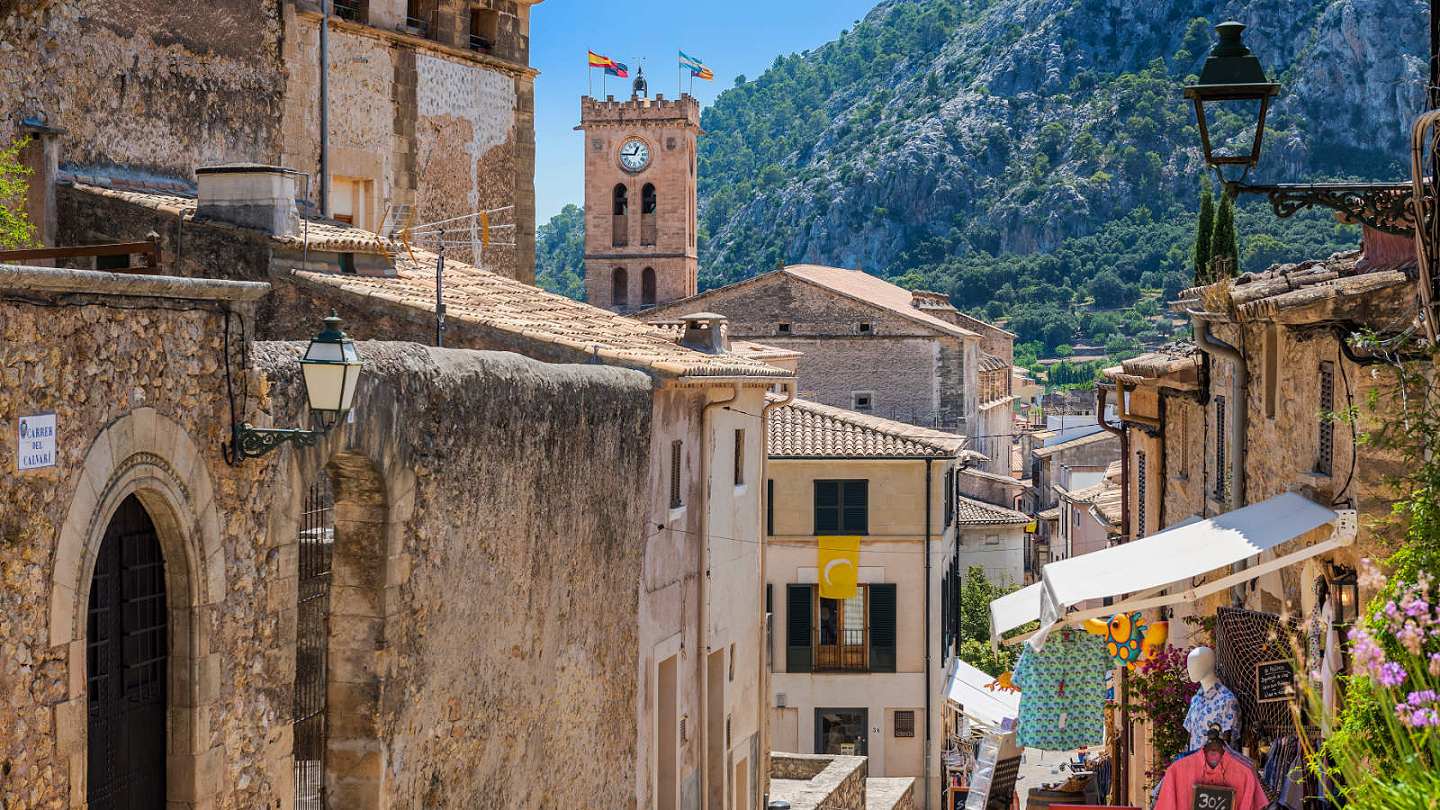
Pollença’s Davallament (the Descent from the Cross) is one of the best known Easter ceremonies in Mallorca. On Good Friday night, after dark, a figure of Christ is taken down from the cross at the chapel at the top of the Calvari, the 365 stone steps that climb above the old town. It is then carried down the steps by torchlight, to the sound of drums, to the parish church of Mare de Déu dels Àngels. The ceremony includes a reading of a poem by Miquel Costa i Llobera, who was born in Pollença.
In 2025 the Davallament started at 9 pm. It draws one of the biggest crowds of any Davallament on the island, so arrive early if you want a good spot on the steps.
Holy Thursday in Pollença
On Holy Thursday night Pollença also holds the Processó de la Sang, which winds through the streets of the town and ends at Plaça Major. In 2025 it started at 9 pm.
Other towns
Alcúdia, Sineu, Felanitx and many other towns have their own processions, and Felanitx also holds its own Davallament on Good Friday. If you are staying near Pollença or Alcúdia, you can see a procession without going far from your villa.
Easter Sunday, Easter Monday and the pancaritats
On Easter Sunday many towns hold their own Encontre procession, in which the figures of the Virgin and the risen Christ are carried from different directions and meet in a square or in front of the church. Sóller, Sineu, Andratx and Porreres are among the towns that keep this tradition.
On Easter Monday and the days that follow come the pancaritats: local pilgrimages up to a hermitage or sanctuary, with Mass, music, traditional dancing and a picnic or a large paella. The name comes from “pa amb caritat”, bread given in charity. A few in the north:
- Pollença: up to the Puig de Maria, the hill just outside the town.
- Muro: to the hermitage of Sant Vicenç.
- Alcúdia: to the hermitage of La Victòria.
- Sa Pobla: to the oratory of Crestatx, one of the busiest pancaritats on the island.
Each town chooses its own day: some hold it on Easter Monday, others on the Tuesday or on the following Sunday (Diumenge de l’Àngel). Everyone is welcome, and walking up with the locals is a good way to spend the morning.
Easter food in Mallorca
In the days before Easter, every bakery fills up with the same handful of Easter specialities:
- Panades: savoury pies, traditionally filled with lamb, and also made with fish or peas.
- Robiols and crespells: the sweet side of Easter, small pastries and biscuits that families make or buy for the holiday.
- Frit de Pasqua: the Easter version of the island’s classic fry-up: lamb, including the offal, fried with potatoes, peppers, peas and other spring vegetables.
Buy a few panades for the villa, or book a private chef and have an Easter lunch cooked for you at home.

What the weather is like at Easter
Late March is spring in Mallorca, not summer. According to AEMET, the average maximum at Palma airport in March is about 17.5°C and the average minimum about 5°C, with four or five days of rain in the month (1981 to 2010 averages). Expect mild, often sunny days that are good for walking and cycling, and cool evenings, which matters if you plan to stand outside for a procession. The weather can change, so bring a warm layer and a rain jacket.
The sea is still cold for most swimmers at this time of year. If a swim is part of the plan, look at our villas with heated pools: pool heating is usually available on request and may carry a supplement, so ask us when you enquire. We can also suggest villas with heating or a fireplace for the evenings.
Where to stay for Easter
- Pollença and Puerto Pollença: the Davallament on the Calvari steps and the pancaritat at the Puig de Maria, plus some of the best walking and cycling routes in spring.
- Alcúdia: processions inside the walled old town and the pancaritat at La Victòria, with Pollença close by.
- Sóller: the Easter Sunday Encontre and the Tramuntana mountains on your doorstep.
- Palma: the place to be for the Holy Thursday and Good Friday processions.
- Countryside villas and fincas: peace and quiet, with village processions within a short drive.
Tips for planning Easter week
- Book early. Easter 2027 is early and falls in the school holidays in much of Germany, so the best villas for that week go first. Our guide on how to book your villa explains how reservations work.
- Plan your shopping. On 25, 26 and 29 March and on Easter Sunday many shops close or open shorter hours, so do a big shop before Thursday.
- Check procession times locally. Town halls and parishes publish their programmes a few weeks before Easter, and times can change from one year to the next.
- Park outside the centre. Streets in the old towns fill up on procession nights, so leave the car on the edge of town and walk in.
- Arrange your transport. We can book car hire and airport transfers so you are not left looking for a car during a busy holiday week.
For more ideas for a spring stay, see our 5 or 7 day itinerary, our guide to Mallorca markets by day of the week and, for a grey day, what to do in Mallorca on rainy or cold days.
Frequently asked questions
When is Easter in Mallorca in 2027?
Easter Sunday is on 28 March 2027. Holy Week starts on Palm Sunday, 21 March.
Which days are public holidays in Mallorca at Easter 2027?
Holy Thursday (25 March), Good Friday (26 March) and Easter Monday (29 March) are public holidays in the Balearic Islands.
Where can I see the best Easter processions in Mallorca?
In Palma, the Holy Thursday procession of the Sant Crist de la Sang is the main event of the week. In the north, the Good Friday Davallament on the Calvari steps in Pollença is one of the most moving ceremonies on the island.
What is a pancaritat?
A pancaritat is a local Easter pilgrimage to a hermitage or sanctuary, with Mass, music and a shared meal outdoors. Each town holds its own, on Easter Monday, the Tuesday after Easter or the following Sunday.
Is it warm enough to swim in Mallorca at Easter?
The sea is cold for most people in late March. Days are mild, with average highs of about 17.5°C in March, so a villa with a heated pool is the best option if you want to swim.
Plan your Easter in Mallorca with us
Tell us your dates, how many of you are coming and which part of the island you prefer, and we will suggest villas that suit your Easter plans, from village houses near the processions to countryside fincas with a heated pool. Contact our team to start planning.
Share this article
Further reading
You may also be interested in these guides
-
03 April 2025
![]()
Discover the Charm of Alcudia Bay in Pollensa and book your perfect holiday villa
-
01 November 2024
![]()
Christmas Markets in Mallorca: A Festive Experience
-
17 July 2026
![]()
What to Do in the North of Mallorca? Our Insider Guide
-
23 May 2021
![]()
Tips for renting a child-friendly holiday villa
-
29 October 2026
![]()
What to Do in Mallorca on Rainy or Cold Days
-
30 October 2024
![]()
Shopping in Northern Mallorca: Top Spots